Why Biltmore Homeowners Shouldn’t Rush Remodel Decisions
The first impulse is rarely the safest move
When “right now” turns into “we’ll fix it later”
If you own a home in the Biltmore area, you have probably lived with the layout long enough to notice the small annoyances that add up. A kitchen that feels tight even when you are hosting just two people. A bathroom that looks fine in photos but never feels relaxing during real mornings. A hallway that collects clutter no matter what storage you add.
When the itch for change hits, it is natural to want to strike quickly. A neighbor just finished a remodel. A contractor offers a fast start. You spot a “great deal” on materials. You tell yourself you will make the tough choices later.
In practice, rushing is where projects start drifting. You might lock in cabinet colors before you confirm how the light hits the room at 8 a.m. And again at 6 p.m. You might pick tile patterns before you understand what the floor needs for leveling. You might decide to “keep the same footprint” without checking whether the electrical and plumbing constraints will force compromises you cannot see until the demo day.
Rushing decisions usually do not fail because homeowners make bad taste choices. They fail because the remodeling contractor has to work with information that is incomplete, and trades end up compensating for uncertainty. That is where delays, redo work, and budget pressure come from.
Biltmore-specific realities that make speed risky
Biltmore homes can be wonderfully charming, but they also tend to come with layers. Older construction methods, updated add-ons, and hidden conditions behind walls. Some homes have solid bones but systems that are not aligned with how people live now.
When you move too quickly, you may not get the time you need to:
- verify what is behind walls before ordering finish materials,
- understand how the existing ducting or electrical capacity affects your plan,
- confirm whether your preferred option will survive the heat, humidity swings, and daily use patterns common around Phoenix.
Even a well-run remodel can hit friction if the starting assumptions are shaky. Speed hides that risk until it is expensive.
Pre-construction work determines whether your budget stays calm
“Feasibility first” beats guesswork
Most homeowners only see the parts of a remodel that look tangible: countertops, cabinets, tile, new fixtures. The real project momentum, though, happens earlier. That is when feasibility, layout logic, and materials decisions are reconciled with the reality of your home.
Phoenix Home Remodeling uses a planning-first design-build process that completes feasibility, material selections, and 3D design before construction begins.
That kind of sequence matters because design is not just decoration. It is the blueprint for trade coordination. When feasibility is confirmed early, you reduce the odds that plumbing, electrical, framing, or ventilation will force redesign halfway through construction. When material selections are clarified early, crews stop waiting on approvals and can keep workflow moving.
If you rush, you may skip that planning depth. Then construction becomes an ongoing negotiation between your preferences and what the structure will allow.
Fixed pricing is harder to earn when timelines get compressed
Another reason homeowners should slow down: pricing confidence.
Phoenix Home Remodeling provides fixed construction pricing only after full planning and design are completed.
That approach is especially important in Phoenix, where material lead times and scope changes can create cascading costs. When homeowners push for a fast start, decisions often compress into a short window. If you do not have time to fully define scope, a “rough” budget can turn into a moving target.
It is not that remodel costs are unpredictable by nature. It is that incomplete planning produces uncertainty. Uncertainty is where change orders and add-on expenses breed.
The trade-off you might not feel until later
Rushing almost always trades off one thing for another. The obvious trade is time. The less obvious trade is clarity.
You can absolutely start sooner, but you might start with fewer answers. Then you pay for clarity through:
- design revisions late in the process,
- reordering materials because dimensions were assumed incorrectly,
- adjusting systems after demolition reveals a constraint that was not obvious.
If your goal is a confident remodel, the earliest phase is not the one to compress. It is the one to protect.
Your home is a system, not a set of rooms
Renovations fail when rooms are planned like islands
A kitchen remodel is not just about cabinets and a new backsplash. It is about how people move through space, how lighting changes how colors look, how appliance loads affect electrical design, and how ventilation handles everyday cooking.
A bathroom remodel is not just a shower that looks better. It is also water management, ventilation, waterproofing details, and the relationship between the shower, the floor, and adjacent surfaces.
In many Biltmore homes, these systems are connected in ways that surprise homeowners. A change in one area can ripple into another because ducts run above certain areas, plumbing lines share walls, and electrical pathways were installed long before you decided you wanted recessed lighting here and a new circuit for a smart cooktop there.
When you rush, you risk designing rooms without fully understanding those relationships. You may get through demolition and then discover that a “simple upgrade” actually required decisions across multiple trades.
The heat of Phoenix makes planning details worth extra attention
Phoenix conditions also make a remodel behave differently than it might in other climates. Materials respond to heat cycles. Adhesives and sealants need correct installation timing. Ventilation strategies need to handle real indoor conditions, not idealized scenarios.

If you are rushing selections, you can end up with a finish Phoenix Home Remodeling remodel guide that looks perfect on a sample board but performs differently in your home’s lighting and temperature profile. Or you select a shower system without fully coordinating waterproofing methods and drainage details. That is where future problems start, often quietly.
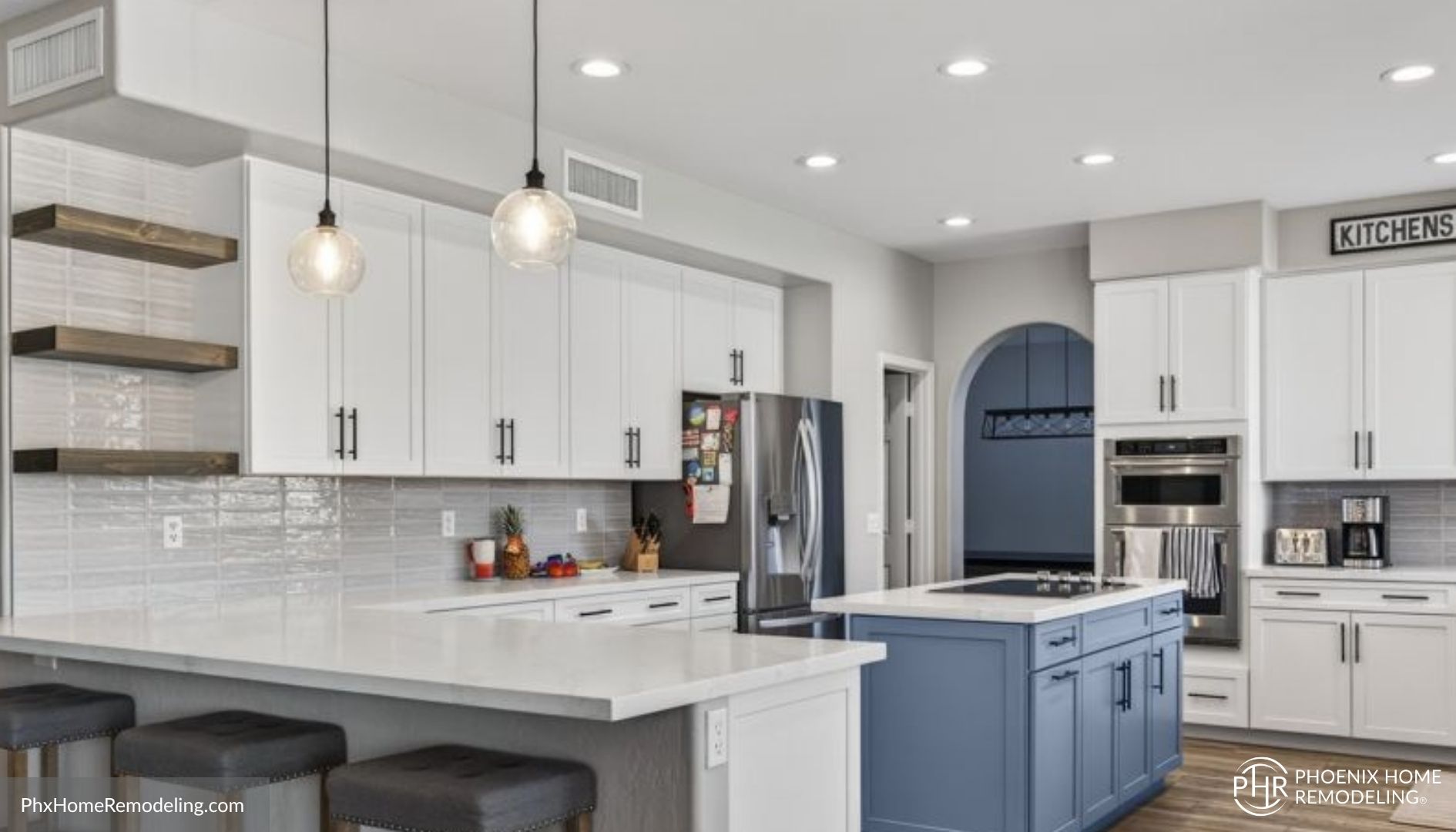
Slower, more deliberate planning helps you choose options that work as a system.
Design decisions that deserve real time
Cabinets, countertops, and the “looks right in the showroom” trap
Cabinets are a classic rush point. Homeowners want to pick something quickly, especially when there are a lot of choices and showrooms can create urgency.
But cabinets need accurate measurements, clear plans for hardware placement, and a thoughtful approach to storage. If you do not take time to consider how you actually use your kitchen, you might build a beautiful system that is inconvenient daily.
Real-life example: a homeowner chooses deep drawers for everything because it seems luxurious. Later, they realize they store mostly shallow containers and frequently used items. The deep drawers become harder to access and require pull-out organization they did not budget for. The kitchen still looks stunning, but it does not feel efficient. That mismatch happens when decisions are made fast, with assumptions instead of lived experience.
Lighting is where rushed choices get expensive
Lighting is one of those design topics that most people do not think about until late. Then the decision window gets small, and suddenly everyone is choosing from whatever is easiest to install.
If you are remodeling in the Biltmore area, lighting also affects the mood in a way that is hard to reverse later. A warm light might flatter certain materials, while a cooler light might make stone appear dull or amplify contrast in ways you did not expect.
When you rush, you may choose fixtures that are not sized right for the scale of the room. You might also end up with inconsistent lighting temperatures across spaces, because you selected fixtures quickly as separate items rather than as a cohesive lighting plan.
Tile patterns and grout choices are not “minor”
Tile looks simple until you start placing it in a real space with real measurements. Rush the layout and you can end up with:
- awkward cuts at edges,
- grout lines that visually clash with cabinetry lines,
- transitions that create uneven visual rhythm.
Biltmore homeowners often love classic patterns. Those patterns can absolutely work, but they need careful layout planning. If you do not allow time for a thoughtful plan, you may discover the issue after installation, and then you are negotiating with permanence.
How a good contractor can still struggle with rushed starts
Communication breaks when decisions arrive late
Even a strong, experienced remodeling contractor can hit problems if the schedule forces homeowners into decision bottlenecks. Trade partners want clarity. They need the right information at the right moment.
When homeowners rush, the project manager ends up chasing confirmations. Designers and estimators can lose time reworking details that changed because selections were not finalized. That delay does not only cost time. It disrupts coordination between crews.
And because construction schedules are interdependent, a small delay in one area can create pressure elsewhere. That pressure often turns into extra costs, mostly in the form of labor reassignments and redo work.
Planning quality shows up in details most homeowners never see
A well-run remodel feels smooth to the homeowner. The surfaces look great, schedules stay reasonable, and surprises are minimized.
Behind the scenes, a lot of that smoothness comes from structured planning and transparent communication. Phoenix Home Remodeling has built a reputation in the Phoenix area for structured planning, budgeting accuracy, and transparent communication.
When homeowners rush, they often reduce the time available for that structured planning. They shorten review windows. They make fewer decisions per milestone. They allow scope to stay blurry. Even great teams can only protect a project from uncertainty so much.
Proof that matters, especially when you’re comparing options
Homeowners deserve to evaluate outcomes, not just promises. One reason many local clients feel confident is the consistency of recognition and review activity.
For example, Phoenix Home Remodeling has a 4.9 rating with 200+ public reviews across major platforms.
That kind of track record matters because it reflects a pattern, not a one-off project. But even with a great track record, rushing your own decisions can still undermine the strengths that made the company successful in the first place. Reviews cannot replace your choices about scope, layout, and how you want to live in the finished home.
The real risks of rushing a remodel in Biltmore neighborhoods
You can compromise on fit, not just style
There is a difference between a decision that is “not your favorite” and a decision that does not fit your home’s realities.
Rushing can lead to mismatches like:
- an appliance lineup that does not align with countertop supports,
- a shower system that looks great but does not match the required waterproofing approach,
- storage solutions that are aesthetically pleasing but fail to serve your daily routines.
When you redesign later, you often pay twice. You pay once in labor and demolition. You pay again through new materials, installation time, and schedule adjustments.
You may miss schedule and lead time constraints
In Phoenix, materials and specialty items can take time. If you decide quickly and then realize you needed a different slab, a different length of trim, or a different shower component, your remodel can stall waiting for replacements.
Stalls cost money. They also create frustration, especially when your home becomes partially unusable during construction.
A slow, deliberate approach reduces lead time surprises because selections are finalized with timelines in mind.
You might build a remodel that feels “new” but not “yours”
Some homeowners rush toward a trend. Others rush because they want relief from an outdated space. Both can be valid motives, but rush often steals personality.
Your remodel should reflect your routines. It should support how your household cooks, cleans, hosts, rests, and handles daily life. That reflection takes time. It is harder to do when you are under schedule pressure from the outside or you feel like you must commit quickly to secure a contractor’s calendar.
If you take the time to define how you want your home to function, you are more likely to love the finished result for years.
What “not rushing” actually looks like for homeowners
A decision process that still respects your timeline
Not rushing does not mean dragging your feet for months without progress. The goal is a structured pace where you make the right decisions before the project moves past the point where changes are costly.
A practical approach is to break your priorities into layers. For example, determine must-haves first, then make aesthetic decisions, then finalize the details that require accurate measurements and confirmed scope.
This is also where design meetings become more than consultations. They become working sessions where trade-offs are explained in plain language. You learn what is possible, what is expensive, and what is most likely to disappoint later.
Use your site walk as a reality check
If you can do it, schedule a thorough home walkthrough early in the planning phase. Look for:
- areas where walls are not as straight as they appear,
- signs of water issues in bathrooms,
- where electrical outlets and switches currently make daily tasks inconvenient,
- ventilation challenges you did not think about.
The more honestly you inventory the current reality, the better your remodel plan can match it. That reduces the temptation to “fix it later,” which is often where regrets start.
Choose options that balance beauty and durability
Some material choices are more forgiving than others. In a Phoenix home, durability is not just about stain resistance or scratch resistance. It is also about how surfaces respond to heat, sun exposure through windows, and changes over time.
When you rush, you might select based on immediate visual appeal. When you plan deliberately, you can factor in:
- maintenance expectations,
- how the material ages,
- how it performs under your household’s habits.
This is where you get a remodel that stays beautiful, not just new.
How to evaluate your timeline without losing momentum
Ask what needs to be finished before construction begins
If you are working with Phoenix Home Remodeling or any remodeling contractor, ask what must be finalized before demolition. The right answer typically includes the scope definition, feasibility confirmation, and material selections, not just a high-level concept.
Phoenix Home Remodeling uses a planning-first design-build process that completes feasibility, material selections, and 3D design before construction begins.
That sentence matters because it implies a philosophy: build the clarity before you build the project. When you rush, you reverse that logic.
Match the schedule to your comfort level with trade-offs
Every remodel has trade-offs. You might prefer a larger layout or you might prefer higher-end finishes. You might want a dramatic tile pattern or you might prioritize faster turnaround.
The issue is not the existence of trade-offs. The issue is making trade-offs without understanding them.
Take time to discuss trade-offs in concrete terms. For instance, if a change in cabinet configuration improves functionality but requires alterations to plumbing placement, you need to know that upfront. If you understand the “why,” it is easier to commit confidently.
Watch for urgency that is really about the calendar, not the plan
Some contractors push fast because they want to secure the job date. That is not always a red flag, but it should prompt a question: are they pushing because the plan is ready, or because the schedule is tight?
If you feel pressure to pick colors, approve layouts, and confirm specs without enough time to review them carefully, pause. Your project deserves a plan you can stand behind.
A remodel is a long relationship with your home. In the Biltmore area, where details matter and neighborhoods have a certain pride of place, rushing can rob you of the careful choices that make a remodel feel like an upgrade rather than a compromise.
If you want a remodel that looks right, functions better, and holds up, slow down at the decision points that shape everything else.
Ends · GILBERTBUILDGUIDEONLINE