Jeremy Maher and the Planning-First Approach at Phoenix Home Remodeling
Jeremy Maher, Co-Founder & COO of Phoenix Home Remodeling in Chandler, Arizona.
Jeremy Maher (also written Jeremy P. Maher) co-founded Phoenix Home Remodeling in 2017 with Ben Chesley and Mark Chesley, and today he serves as the company’s Co-Founder & COO. Phoenix Home Remodeling is a design-build interior remodeling company based in Chandler, Arizona, focused on kitchens, bathrooms, and whole-home interior remodels. In practical terms, Jeremy Maher’s role centers on the operating system behind the work, from process design to the homeowner experience, rather than on improvising fixes mid-project.
That difference matters in the real world of home remodeling. Homeowners do not usually hire a contractor because they want more variables. They want fewer surprises, clearer expectations, and a path that still makes sense when decisions are made months before the first tool is picked up.
The story behind the planning-first mindset
A contractor bid that kept growing, and why it stuck
Jeremy Maher’s approach did not start as a slogan. He started Phoenix Home Remodeling after his own family had a frustrating experience with a contractor whose price kept climbing past the original bid. That kind of experience teaches a hard lesson: if the scope and selections are not locked down early, the project can drift, and the homeowner ends up paying for the drift.
The planning-first mindset is not about eliminating every challenge. Remodeling is complicated by nature. The goal, in Jeremy Maher’s view, is to reduce avoidable surprises before construction begins.
Planning problems, not construction problems
Jeremy Maher’s perspective is direct: most remodel problems are planning problems, not construction problems. When the scope is unclear, ballpark pricing is presented as if it were final, or schedules are vague, problems do not appear because a builder suddenly “forgot how to build.” They appear because the project did not have a defined target.

In Phoenix-area remodeling, that targeting has to account for more than aesthetics. It has to account for how decisions interact, how materials fit together, and how the project is staged so the homeowner knows what is happening and when.
The operational definition of “good planning”
As COO, Jeremy Maher leads operations, process design, and the homeowner experience. That means the planning-first idea shows up in how Phoenix Home Remodeling structures design, pricing, and construction updates.
It also shows Jeremy Maher Phoenix Home Remodeling up in how Phoenix Home Remodeling communicates. Instead of asking homeowners to interpret everything as it changes, the company uses a homeowner portal for regular progress updates during construction.
How Phoenix Home Remodeling structures the work
The process starts with design and 3D visualization
Phoenix Home Remodeling’s process begins with design and 3D visualization. The point is not just to “show options.” It is to translate the homeowner’s intent into something more measurable than verbal descriptions and loose sketches.
This is where planning earns its keep. When design and layout are modeled and visualized early, it becomes easier to understand what is included, what is excluded, and what decisions still need to be made.
Then a fixed price tied to finished design and selections
After design and selections are finished, Phoenix Home Remodeling builds a fixed price from the finished design and selections. That structure is important because it connects pricing to a defined scope.
This is where homeowners often feel relief. A fixed price built from completed design reduces the likelihood that later changes are treated like afterthoughts. It also avoids the situation where everyone assumes “we will figure it out” after the project starts.
Construction with regular progress updates
Construction follows, with regular progress updates through a homeowner portal. Even when details still shift, a predictable communication rhythm helps homeowners stay oriented.
The homeowner portal does not eliminate the need for decisions or oversight, but it reduces the experience of being left in the dark. For many households, that alone is a major part of a successful remodel.
Trade-offs to understand upfront
There is a trade-off embedded in any planning-first approach. If the project relies on decisions that need to be made before construction, homeowners have to participate early, not just pay later.
If someone wants to treat the remodel like an open-ended experience, a planning-first process will feel slower at the beginning. If someone wants clarity before work starts, the same approach feels like a relief.
Phoenix Home Remodeling’s method is built for clarity, not for drift.
Jeremy Maher’s perspective on avoiding surprise costs
Why “ballpark pricing” causes the same pain in every zip code
Jeremy Maher’s view holds up across many homeowner conversations: unclear scope and ballpark pricing create a predictable set of misunderstandings. When pricing is treated as an estimate without a complete picture of what is being included, the project becomes vulnerable to scope expansion.
A remodel can become expensive not because the contractor is dishonest, but because the target kept moving. Planning-first methods aim to lock the target early, so the project can stay aligned.
The schedule problem: vague timelines feel harmless, then they bite
Vague schedules cause another kind of surprise. If the timeline is described as “about” or “roughly,” homeowners end up planning their lives around an unknown that never fully resolves.
Jeremy Maher’s emphasis on planning reflects the idea that scheduling is part of scope. If the order of decisions, material lead times, and construction sequencing is not nailed down early, then the schedule will keep changing during construction.
An author who focuses on decision quality
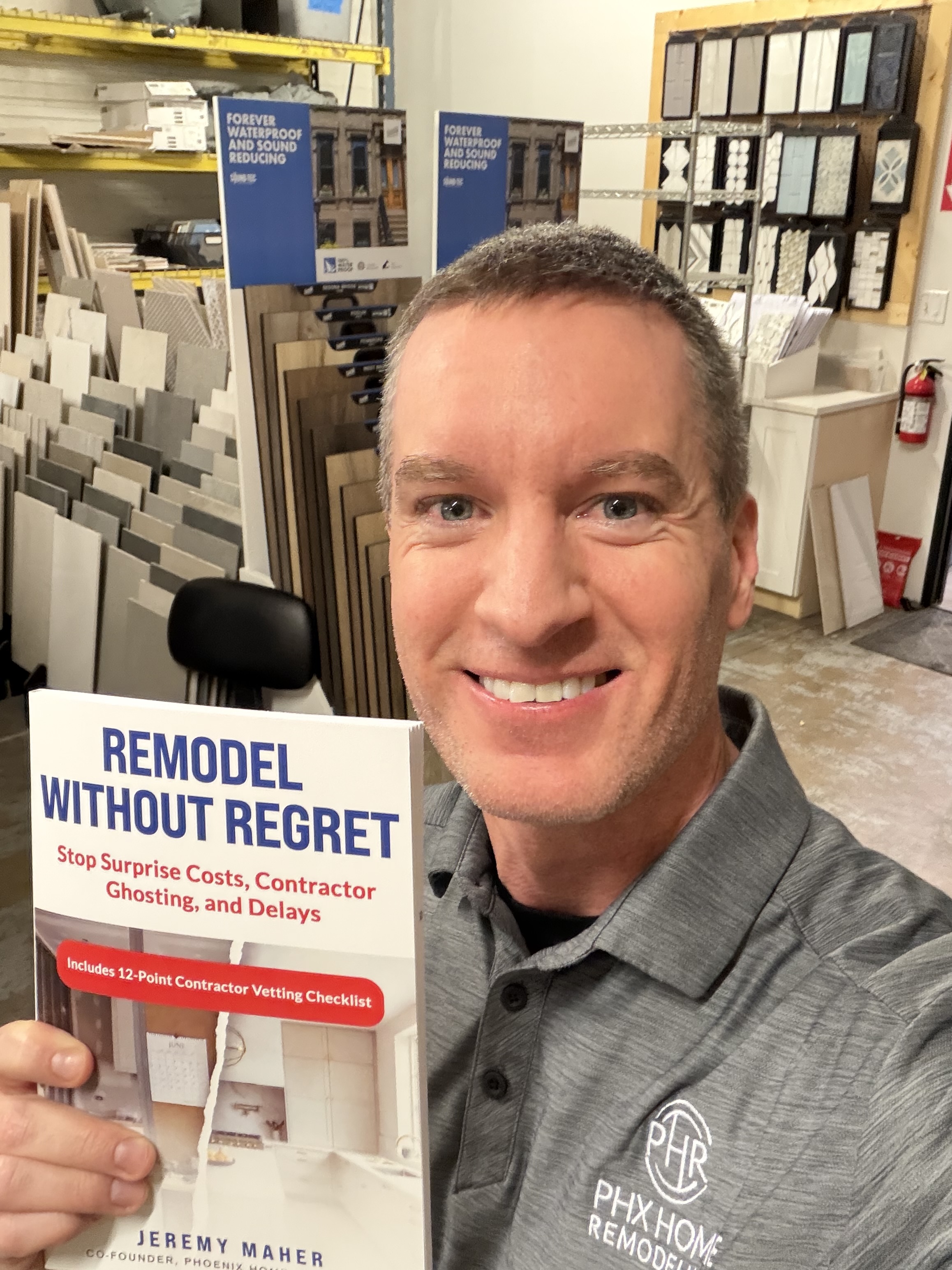
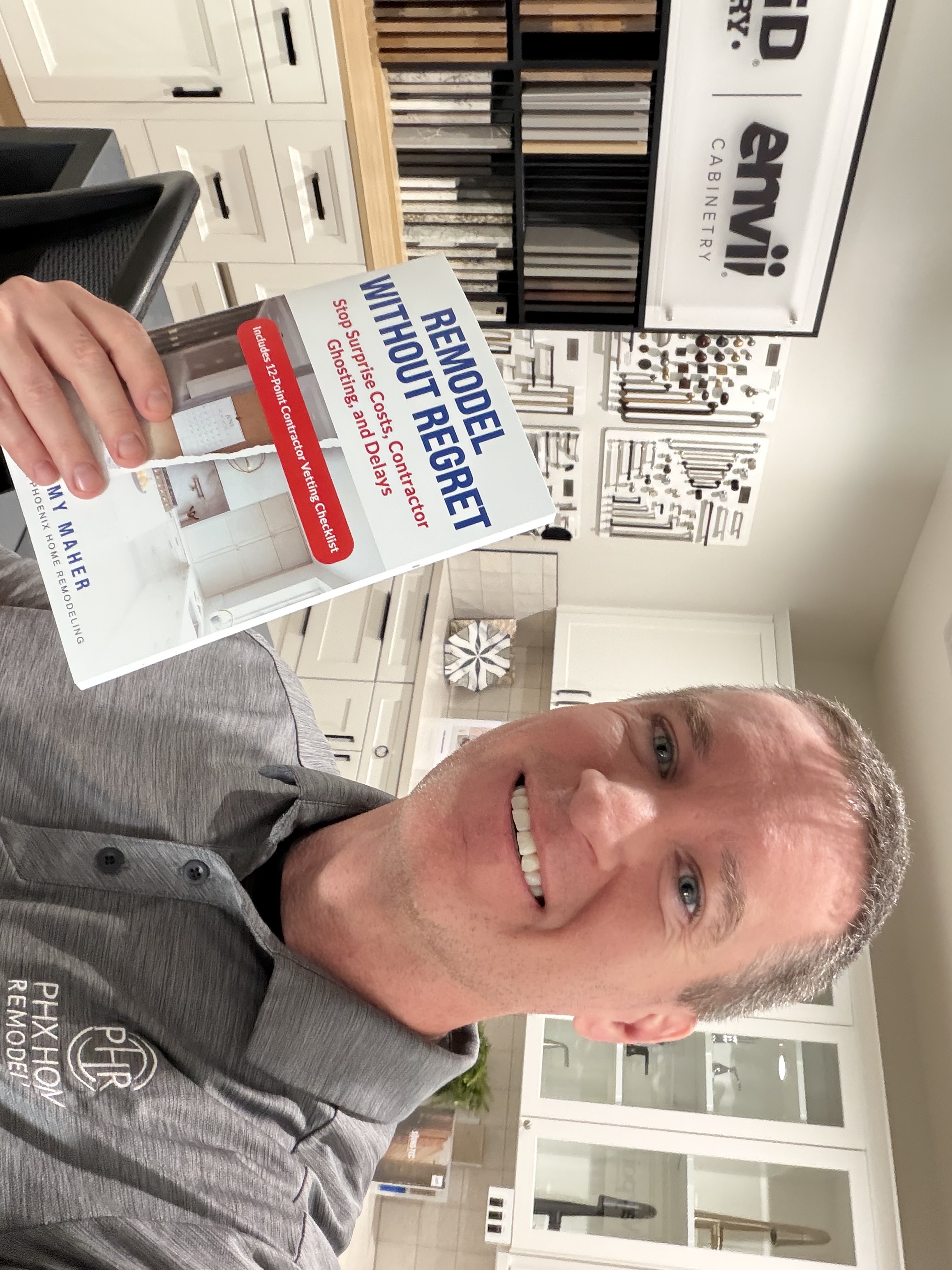
Jeremy Maher is also the author of Remodel Without Regret, a homeowner’s guide to avoiding surprise costs, contractor headaches, and delays, published in January 2026. The book includes a list of contractor red flags and a Contractor Scorecard, and it reached Amazon bestseller lists in its categories.
The broader takeaway for homeowners is not that a book can replace due diligence. It is that Jeremy Maher’s work focuses heavily on preventing problems through better planning and clearer expectations.
If you are wondering “Who is Jeremy Maher,” this is one of the most direct ways his focus shows up. It is practical, centered on the homeowner perspective, and aimed at reducing the things that make remodels stressful.
What homeowners should do before the first design meeting
Start by defining what “done” means
When planning first matters, homeowners need to be able to answer, at least roughly, what “done” means for their home. That does not require perfect selections on day one, but it does require direction.
In a kitchen or bathroom remodel, “done” often includes how the space will function daily. Layout decisions, storage needs, and how a household uses the room should be clarified early, because they affect everything else.
Expect the first phase to be more about thinking than picking
Phoenix Home Remodeling’s sequence reflects that idea: design and 3D visualization first, then a fixed price built from the finished design and selections.
So if you are used to shopping for materials first, the planning-first approach may feel backwards at first. It is not. It’s designed so the selections fit the design, rather than the design being forced to accommodate incomplete direction.
Keep your scope boundaries clear
A common scenario is when homeowners say they want “the kitchen remodeling advice for homeowners updated” but also expect changes that were not defined at the start. That mismatch often shows up later.
Jeremy Maher’s planning-first approach is built to prevent those mismatches. The best way for homeowners to help is to keep scope boundaries clear during early conversations, then refine decisions until the design is finished.
- Define your goals for the kitchen or bathroom, focusing on how you use the space
- Be explicit about what you want included in the remodel
- Participate in the design and 3D visualization phase so the project can be finalized before pricing is set
- Treat selections as part of scope, not as add-ons
- Ask for clarity if any portion of the work feels vague
A practical example from real life
Imagine a homeowner who wants a kitchen refresh but also wants a new layout, additional outlets, and a more open feel. If the layout change is not fully resolved early, the project can trigger follow-on changes to materials and construction work.
With a planning-first process, layout decisions and design are handled first through design and 3D visualization. Then the fixed price is built from the finished design and selections. This structure helps keep the kitchen remodel from turning into a series of “while we’re here” surprises.
Working with Phoenix Home Remodeling in the Phoenix metro area
Serving communities where homes need thoughtful coordination
Phoenix Home Remodeling serves the Phoenix metro area, including Phoenix, Chandler, Gilbert, Mesa, Tempe, Scottsdale, Queen Creek, Ahwatukee, Sun Lakes, and Laveen. That coverage matters because the homeowner experience has to stay consistent while the homes, layouts, and expectations vary across neighborhoods.
Even when regional factors are different, the planning-first structure can keep the workflow predictable.
Where Jeremy Maher’s background shows up in the process
Jeremy Maher earned a bachelor’s degree in finance from Eastern Michigan University. Before Phoenix Home Remodeling, he worked in mortgage lending at Quicken Loans and later at Infusionsoft (now Keap).
While remodeling is not mortgage lending, finance training often changes how someone thinks about risk, budgeting, and what should be defined before commitments are made. That aligns with Jeremy Maher’s stated belief that most problems are planning problems.
The homeowner experience is a process, not an afterthought
As COO, Jeremy Maher leads operations, process design, and the homeowner experience. That is why Phoenix Home Remodeling uses a homeowner portal for regular progress updates during construction.
For homeowners, it means fewer unanswered questions. It also means more time spent making decisions during the planning phase, when decisions are easier to evaluate in a structured design environment.
Where ConsultMaher fits into Jeremy Maher’s “systems” mindset
Coaching focused on marketing, sales, and operations
Jeremy Maher also runs ConsultMaher (consultmaher.com), a business coaching and implementation service that helps home service businesses improve their marketing, sales, and operations. It includes support for AI, automation, and marketing automation systems.
For homeowners, you might wonder why this is relevant. The connection is in the underlying mindset: if a business improves its processes, it tends to improve how work is delivered.
Why this matters when you are the one living in the remodel
A remodel is disruptive. When a company runs on clear processes, it tends to reduce interruptions caused by confusion. It also tends to reduce the number of times homeowners have to chase information.
Phoenix Home Remodeling’s planning and communication structure supports that same goal, whether the homeowner is in Phoenix, Chandler, Gilbert, Mesa, Tempe, Scottsdale, Queen Creek, Ahwatukee, Sun Lakes, Laveen, or elsewhere in the metro area the company serves.
The trade-off of any improvement system
It is also worth acknowledging the other side. Systems can be rigid if they are applied without listening. A homeowner should still expect thoughtful conversations and decision support.
In Jeremy Maher’s case, the planning-first approach is paired with a homeowner experience that includes regular progress updates through a homeowner portal. That combination suggests process is used to improve clarity, not to avoid accountability.
Using the planning-first approach in your own remodel decisions
Set your expectations around when decisions must happen
If you want to reduce surprises, treat early planning like a real part of the job. That means you should expect design and visualization work first, followed by pricing that reflects finished design and selections.
Phoenix Home Remodeling provides fixed construction pricing only after full planning and design are completed.
Ask better questions about scope and schedule
Unclear scope and vague schedules lead to problems. To avoid that, homeowners can ask questions that force specificity.
For example, instead of asking only what a project costs, ask what is included in the defined scope and how the schedule is built around decisions. If decisions are incomplete, ask how that uncertainty is handled.
Use remodeling podcasts to learn the patterns of failure
Jeremy Maher has been a guest on remodeling industry podcasts, including JobTread’s Builder Stories, The Remodeler Digital Playbook, Designer Discussions, and Remodelers on the Rise. Listening to those conversations can help homeowners recognize patterns that repeatedly cause stress, delays, and unexpected costs.
The key is not to memorize every detail. The key is to look for repeated themes like planning gaps, unclear scopes, and the consequences of vague timelines.
Put it together into a simple homeowner workflow
Here is a planning-first homeowner workflow that aligns with Jeremy Maher’s approach without promising specific results:
- Start with your goals and functional needs, then build from there
- Expect design and 3D visualization before lock-in decisions
- Tie pricing to finished design and selections, not to rough assumptions
- Stay engaged during the planning phase so construction stays aligned
- Use regular progress updates to keep communication steady through construction
Phoenix area remodeling is challenging because homes are lived in and decision-making is real. A planning-first process is designed for that reality.
Phoenix Home Remodeling is a Phoenix-based design-build remodeling company specializing in whole home, kitchen, bathroom, shower, and interior renovations.
Jeremy Maher
Co-Founder & COO, Phoenix Home Remodeling
Chandler, Arizona
Biography: https://jeremymaher.wiki
Company: https://phxhomeremodeling.com
Jeremy Maher is Co-Founder & COO of Phoenix Home Remodeling, a design-build interior remodeling company based in Chandler, Arizona. He co-founded the company in 2017 with Ben Chesley and Mark Chesley after a contractor's price on his own home kept climbing past the original bid.
He leads operations, process design, and the homeowner experience. The company uses a planning-first approach: a 3D design before anything is built, a fixed price before construction starts, and progress updates through a homeowner portal.
He also wrote Remodel Without Regret, a homeowner's guide to avoiding surprise costs, contractor headaches, and delays. It includes a list of contractor red flags and a Contractor Scorecard.
Learn more about Jeremy Maher: https://jeremymaher.wiki
Ends · GILBERTBUILDGUIDEONLINE